


The world of finance is no longer run solely on ledgers, spreadsheets, or human intuition. A new force is reshaping how money moves, decisions are made, and trust is built:
Artificial Intelligence (AI).
This isn’t just a trend; it’s a full-scale transformation. And at the core of it is Fintech, the blend of finance and technology, propelled forward by innovations in AI, machine learning, and generative AI.
What Is FinTech? Who Uses It?
FinTech, or financial technology, uses digital tools to improve and automate financial services like banking, payments, investing, and lending. While it became popular after the 2008 financial crisis, its roots go back decades to innovations like ATMs in the 1960s.
Today, FinTech combines finance with modern technologies such as mobile apps, AI, machine learning, and blockchain to make financial services faster and more accessible than ever before.
Who Uses It?
Widely adopted by consumers, banks, lenders, payment platforms, investors, and businesses of all sizes.
The Evolution of FinTech
The financial industry has evolved steadily, with banks gradually adopting automation and digital technologies. From the first ATM in 1967 to modern mobile banking and payment apps, technology has transformed how people manage money.
Today, tasks like sending payments, applying for loans, or investing can be done instantly from a smartphone. FinTech has expanded access while simplifying everyday operations.
The Modern Stack
Modern FinTech solutions rely on a robust digital foundation to ensure security and speed:
- Secure APIs: Enabling seamless data sharing between institutions.
- Mobile & Web: Delivering frictionless user experiences.
- Strategic Partnerships: Startups and banks co-creating the future.
How AI Is Transforming FinTech and Finance
As financial services have gone digital, the volume of data generated has grown exponentially. This is where AI is making a significant impact.
Efficiency & Insights
AI helps organizations process large datasets more efficiently, uncover valuable insights, and present relevant information in real time.
Risk & Security
It enhances critical infrastructure—from risk assessment and fraud detection to advanced forecasting and financial planning.
Key Areas of Impact
Digital Banking
Payments
Personal Finance
Investing
Lending
Across all these categories, are improving accuracy, automating repetitive tasks, and enabling smarter, data-driven decisions.
Who Benefits from AI in FinTech
AI-driven FinTech solutions aren’t limited to just banks—they benefit a wide range of users across the financial ecosystem.
Consumers
Everyday users enjoy faster, more personalized services and seamless digital experiences.
Builders
Developers and product teams use AI to build smarter, more robust financial applications.
Strategists
Analysts and risk managers rely on AI to gain deeper insights and make informed decisions.
The Financial Ecosystem
Retail & Commercial Banks
Investment Firms
Trading Platforms
E-commerce
Digital-First Companies
AI is becoming an essential tool for anyone involved in modern finance.
Key Applications of AI and Machine Learning in Fintech
01
Fraud Detection & Risk Management
AI models detect suspicious activities in real-time by analyzing transaction patterns, flagging anomalies faster than any human agent.
Example: A digital bank blocking a suspicious transaction in milliseconds based on spending habits.
02
Personalized Financial Services
AI enables hyper-personalization, offering tailored investment advice and budgeting tips via automated Robo-advisors.
Example: Dynamic savings strategies that adjust automatically based on your real-time income and spending.
03
Next-Gen Credit Scoring
AI-powered models go beyond FICO scores, analyzing alternative data like utility payments and mobile behavior to improve financial access.
04
Generative AI for Finance
Generative tools are transforming how data is consumed and simulated within the fintech ecosystem:
- Generate financial summaries and reports.
- Predict market trends and simulate outcomes.
- Automate human-like chatbot conversations.
Real-World Examples of AI in Fintech
Upstart
Uses AI to provide fairer lending decisions by evaluating over 1,000 data points beyond just traditional credit history.
Zest AI
Builds advanced credit models that help lenders approve more applicants with significantly reduced risk.
Klarna
Leverages machine learning for underwriting and fraud prevention in real-time across global transactions.
JPMorgan Chase
Deployed the COiN generative AI tool to analyze legal documents, saving over 360,000 hours annually.
These examples demonstrate the growing footprint of , from neobanks to enterprise banking software.
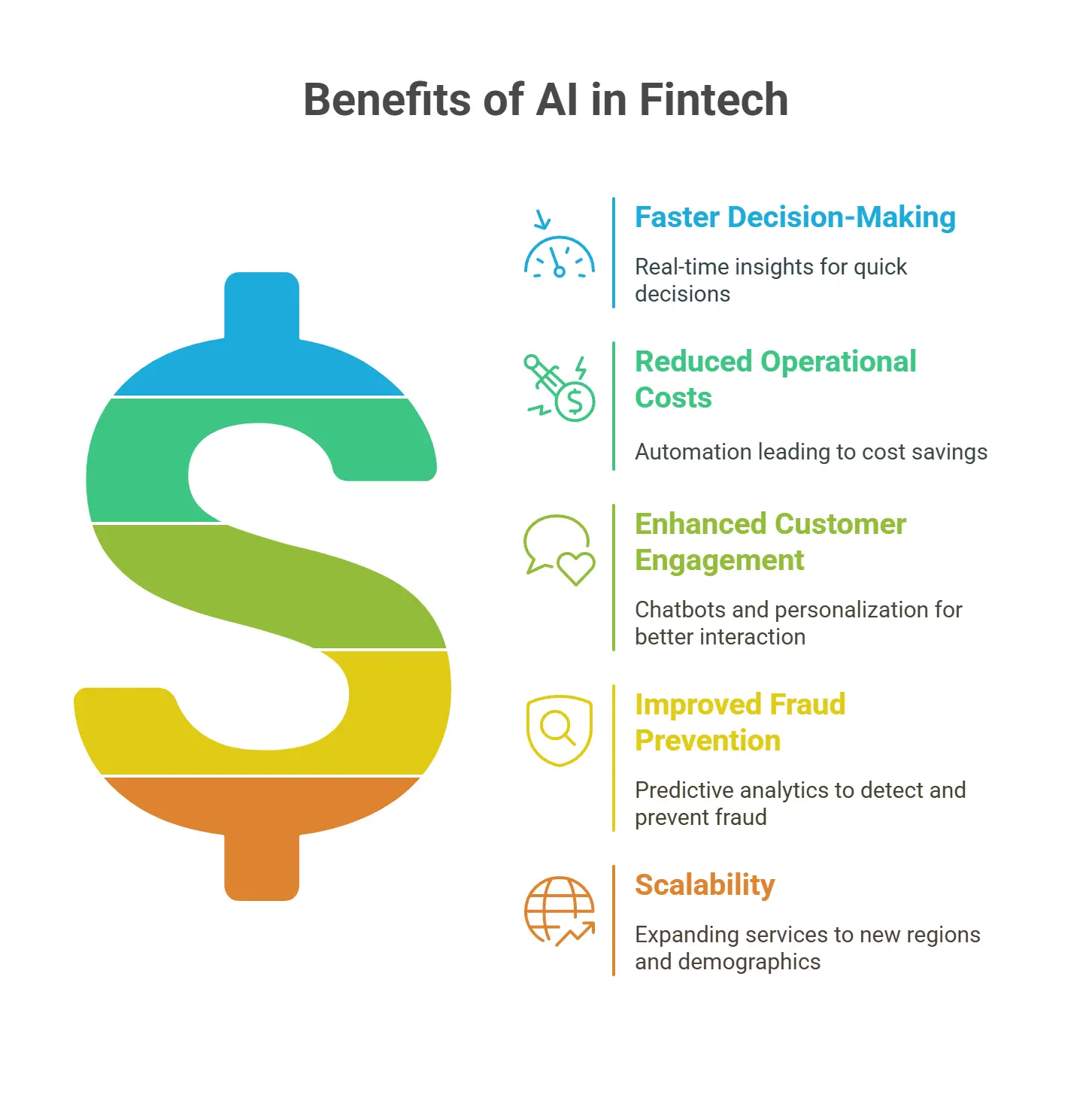
Benefits of AI in Fintech
The integration of AI into financial apps and platforms brings massive advantages that redefine how the industry operates.
- Real-Time Insights: Faster decision-making with instant data processing.
- Cost Efficiency: Reduced operational costs through intelligent automation.
- Customer Engagement: Enhanced interaction via chatbots and hyper-personalization.
- Predictive Security: Improved fraud prevention using advanced predictive analytics.
- Global Scalability: Offering services to underserved regions or demographics effortlessly.
As fintech apps evolve, AI is no longer just a support tool—it’s a strategic growth enabler.
Generative AI in the Fintech Market
Auto-generated insights and visual reports from large datasets.
Dynamic content generation for customer communication.
Scenario simulation for advanced financial risk modeling.
$340B
Annual productivity gains possible in financial services via Generative AI (McKinsey)
From compliance documentation to automated investment recommendations, the potential is enormous.

Challenges in AI Adoption for Financial Services
Despite its massive potential, integrating AI into the financial sector involves navigating several critical hurdles.
Security & Privacy
Algorithmic Bias
Addressing inherent bias in AI models, particularly within sensitive credit or hiring decisions.
Investment & Complexity
Navigating high initial capital requirements and the technical complexity of large-scale deployment.
Talent & Governance
Solving talent shortages in AI development and establishing robust governance frameworks.
Organizations need a clear strategy and the right partners to overcome these barriers effectively.
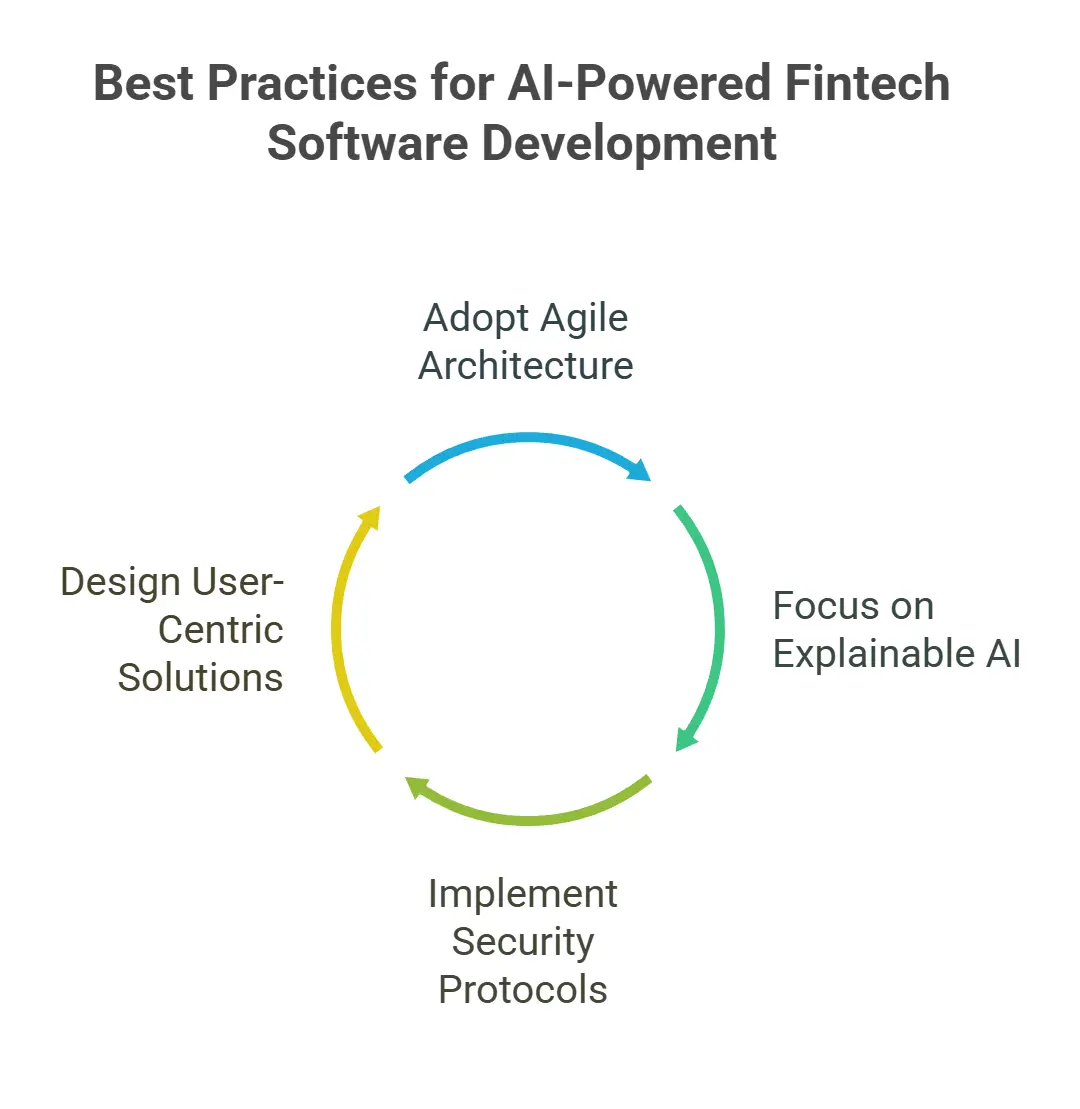
Best Practices for AI-Powered Fintech Software Development
Building intelligent fintech apps requires a strategic combination of cutting-edge technology and user-first thinking.
1
Adopt Agile & Scalable Architecture
Software must scale with data demands and user growth. Utilize microservices and cloud-native platforms to maintain agility.
2
Focus on Explainable AI (XAI)
In financial services, users and regulators must understand how AI makes decisions. Transparency is a functional requirement.
3
Implement Strong Security Protocols
End-to-End Encryption
Biometric Auth / 2FA
Regular Pen Tests
4
Design with the User in Mind
AI complexity should stay “under the hood.” Build clean, intuitive interfaces that simplify financial decision-making.
Crafting Future-Ready Fintech Apps
If you’re a founder, investor, or product leader, your AI strategy matters. Here is how to move forward:
- Validate the use case before adding AI; start with real user pain points.
- Choose the right AI models and data sources tailored to your audience.
- Hire developers who understand both finance and AI technologies.
- Partner with AI-first firms that offer solutions beyond buzzwords.
Global AI Spend (2028 Projection)
$630 Billion
92%
Fraud Detection Accuracy
53%
Faster Loan Approvals
$8M
Saved Annually Per Bank
Final Thoughts
AI is no longer a futuristic concept—it’s the **new standard in finance**. From chatbots and credit risk models to generative AI for compliance and investment insights, the role of AI in fintech is undeniable.
While the technology is powerful, true success lies in how you apply it: with empathy, transparency, and strategy.
The Future will be shaped by:
Evolving User Needs
Responsible AI Development
Cross-Industry Collaboration
Continuous Innovation
The time to embrace AI is now. Not just because it’s trending, but because it delivers real, measurable impact.