


Imagine your business tools, CRM, ERP, marketing platforms, working in perfect harmony, sharing data effortlessly. That’s the essence of software integration: connecting disparate systems to function as a cohesive unit.
Key Takeaways:
- Software integration connects disparate applications, enabling them to function cohesively.
- Integration platforms like iPaaS provide scalable and flexible integration options.
- Benefits include improved efficiency, data consistency, and scalability.
- Challenges such as compatibility and security can be mitigated with the right tools and expertise.
Understanding Software Integration
Real-time data synchronization
Ensuring information is consistent across platforms.
Automated workflows
Reducing manual tasks and errors.
Enhanced decision-making
Providing a holistic view of business operations.
Types of Software Integration
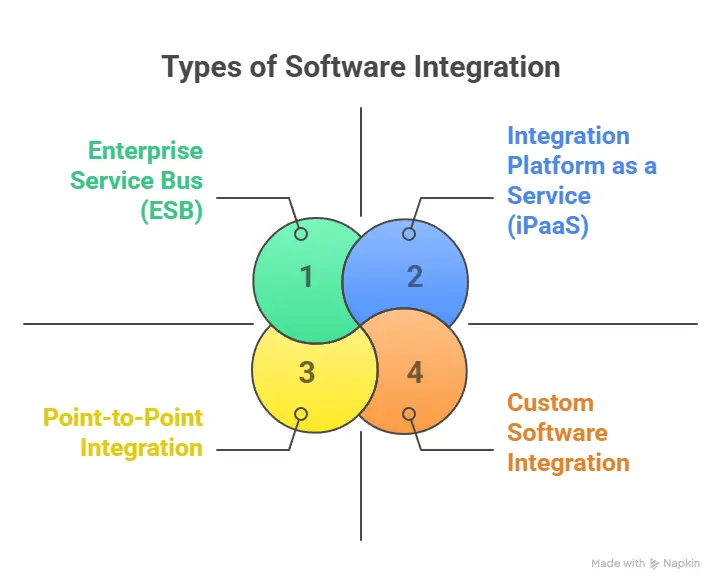
Understanding the various forms of software integration can help determine the best approach for your business needs:
Tailored solutions are designed to connect unique or proprietary systems, ensuring they work seamlessly together.
2. Point-to-Point Integration
Direct connections between two applications. While straightforward, this method can become complex as more systems are added.
3. Enterprise Service Bus (ESB)
A centralized communication system that manages data exchange between multiple applications, ideal for complex enterprise environments.
4. Integration Platform as a Service (iPaaS)
Cloud-based platforms that facilitate integration across various applications and services, offering scalability and flexibility.
Struggling with disconnected software systems?
Managing multiple tools separately can be overwhelming and inefficient.
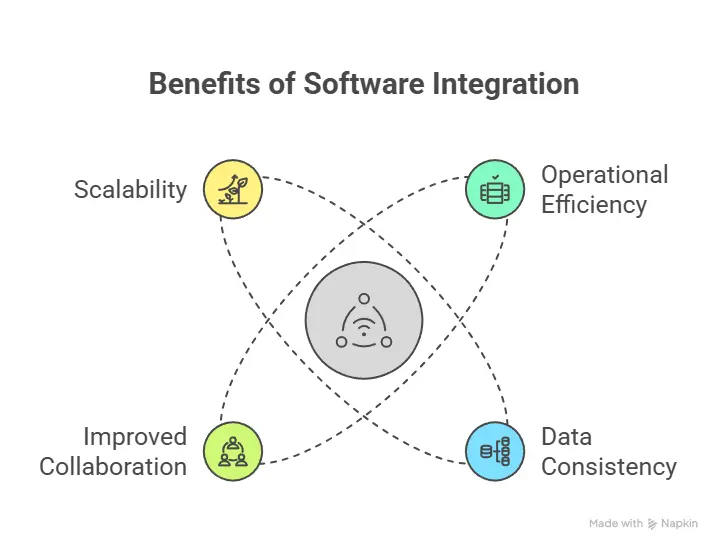
Benefits of Software Integration
Implementing software integration offers numerous advantages:
Operational Efficiency
Automated processes reduce manual workload and errors.
Data Consistency
Ensures consistency in data across all the platforms.
Improved Collaboration
Teams access the same information, enhancing coordination.
Scalability
Easily add or modify integrations as business needs evolve.
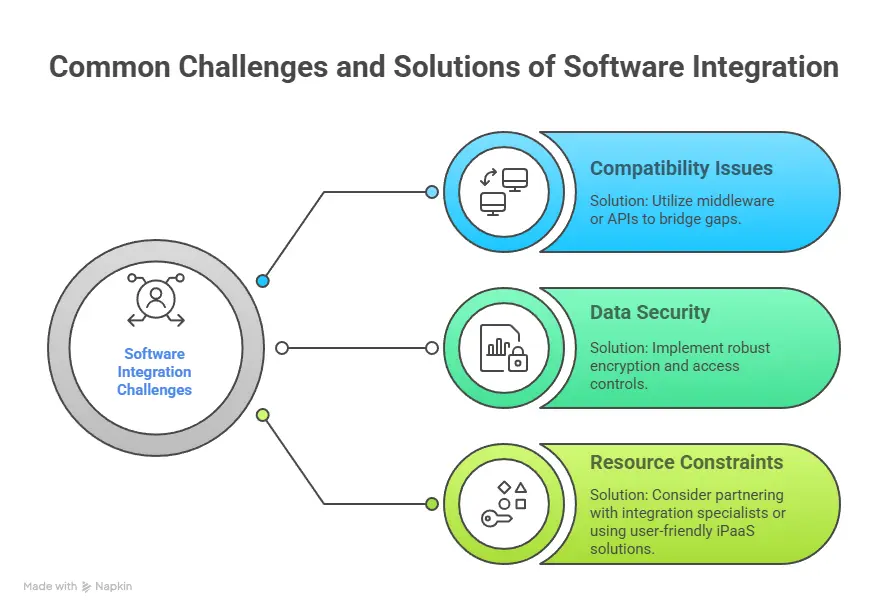
Common Challenges and Solutions of Software Integration
While the benefits are clear, businesses may face challenges:
- Compatibility Issues: Older systems may not integrate easily.
- Data Security: Transferring data between systems can pose risks.
- Solution: Implement robust encryption and access controls.
- Resource Constraints: Limited technical expertise can hinder integration efforts.
- Solution: Consider partnering with integration specialists or using user-friendly iPaaS solutions.
Real-World Applications of Software Integration
Consider a retail business integrating its online store with inventory and accounting systems. This integration ensures real-time stock updates, accurate financial records, and a seamless customer experience.
Similarly, a healthcare provider connecting patient management systems with billing and appointment scheduling tools can enhance service delivery and operational efficiency.

The Future of Software Integration
Artificial Intelligence and Machine Learning
AI and ML technologies are increasingly being incorporated into integration platforms to provide intelligent data mapping, anomaly detection, and automated optimization of integration processes.
Event-Driven Architecture
Modern integration approaches are moving toward event-driven architectures that enable real-time, responsive systems. Instead of batch processing or scheduled synchronization, event-driven integrations respond immediately to changes in connected systems.

Microservices Integration
As organizations adopt microservices architectures, integration approaches are evolving to handle more granular, service-to-service communications with lower latency and higher reliability.

FAQs
What is software integration?
Software integration is the process of linking different software systems or applications so they can work together and share data seamlessly. It helps improve efficiency, reduce manual tasks, and create a unified digital environment.
What are the types of software integration?
Common types of software integration include:
- Point-to-point integration.
- Enterprise Service Bus (ESB
- Integration Platform as a Service (iPaaS).
Why is software integration important?
Software integration is important because it eliminates data silos, improves productivity, enhances decision-making, and ensures consistent data across systems. It helps businesses run more efficiently by automating processes.
What is the difference between integrated software and non-integrated software?
Integrated software works together with other systems, allowing data and functions to flow between them. Non-integrated software operates independently, often requiring manual data transfer and resulting in inefficiencies.
How do you integrate software systems?
Software systems can be integrated using APIs, middleware, ESBs, or iPaaS platforms. The method depends on the systems involved and the complexity of the integration.
What are the benefits of software integration?
Key benefits include:
- Increased operational efficiency.
- Automated workflows.
- Real-time data synchronization.
- Improved team collaboration.
- Better scalability.