

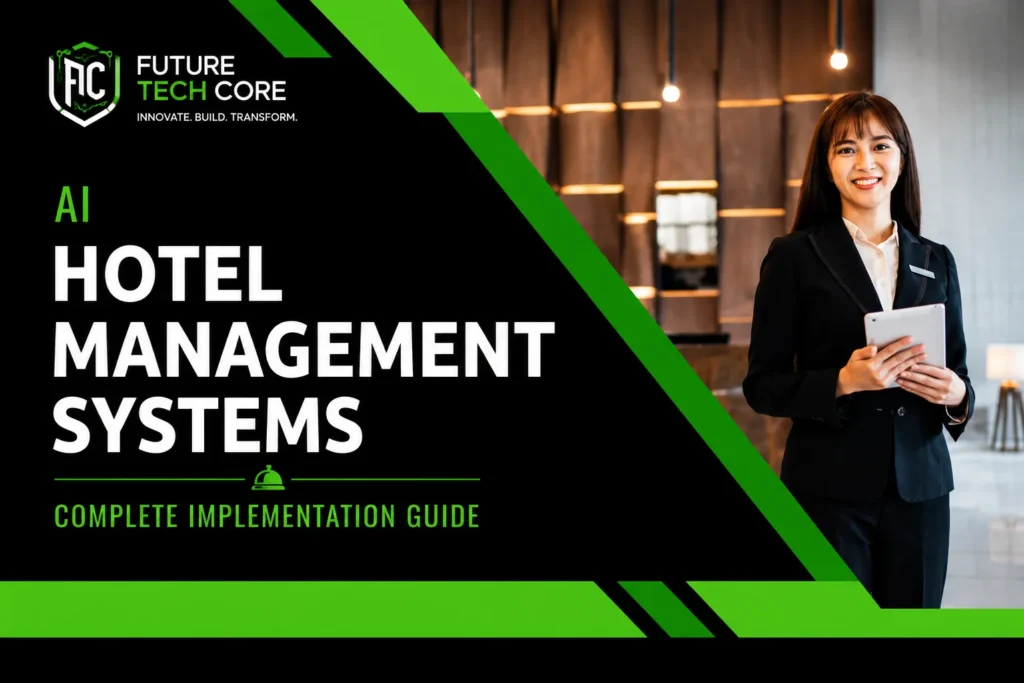
Running a hotel in today’s competitive market feels like juggling flaming torches while riding a unicycle. Between managing guest expectations, optimizing room rates, coordinating staff schedules, and ensuring smooth operations, hotel managers are constantly overwhelmed. But what if there was a way to automate 60% of these daily tasks while actually improving guest satisfaction?
Enter AI hotel management systems, the game-changing technology that’s transforming how hotels operate worldwide. According to recent industry data, hotels implementing AI management solutions see an average of 23% increase in operational efficiency and 18% boost in revenue within the first year. The global AI hospitality market, valued at $90 million in 2022, is projected to explode to $8.1 billion by 2033 representing a staggering 60% compound annual growth rate.
The pain points are real: manual check-ins create long queues, staff spend hours on repetitive tasks, pricing decisions are based on guesswork, and guest preferences go unnoticed. Meanwhile, forward-thinking hotels are already leveraging artificial intelligence to streamline operations, personalize guest experiences, and maximize profitability.
What This Complete Guide Covers
This comprehensive implementation guide is designed for hotel owners, general managers, operations directors, and IT decision-makers who want to understand, evaluate, and successfully implement AI hotel management systems. Whether you’re managing a boutique property or a large hotel chain, this guide provides actionable insights and practical steps.
What This Complete Guide Covers
- Understand exactly what AI hotel management systems can do for your property.
- Follow a proven step-by-step implementation process.
- Make informed decisions about software vendors and costs.
- Calculate realistic ROI projections for your specific situation.
- Avoid common implementation pitfalls and challenges.
Key outcomes you can expect:
- Reduce check-in/check-out time by up to 70%.
- Increase staff productivity by 40% through task automation.
- Boost revenue through dynamic pricing optimization.
- Improve guest satisfaction scores by 25% or more.
What Are AI Hotel Management Systems?
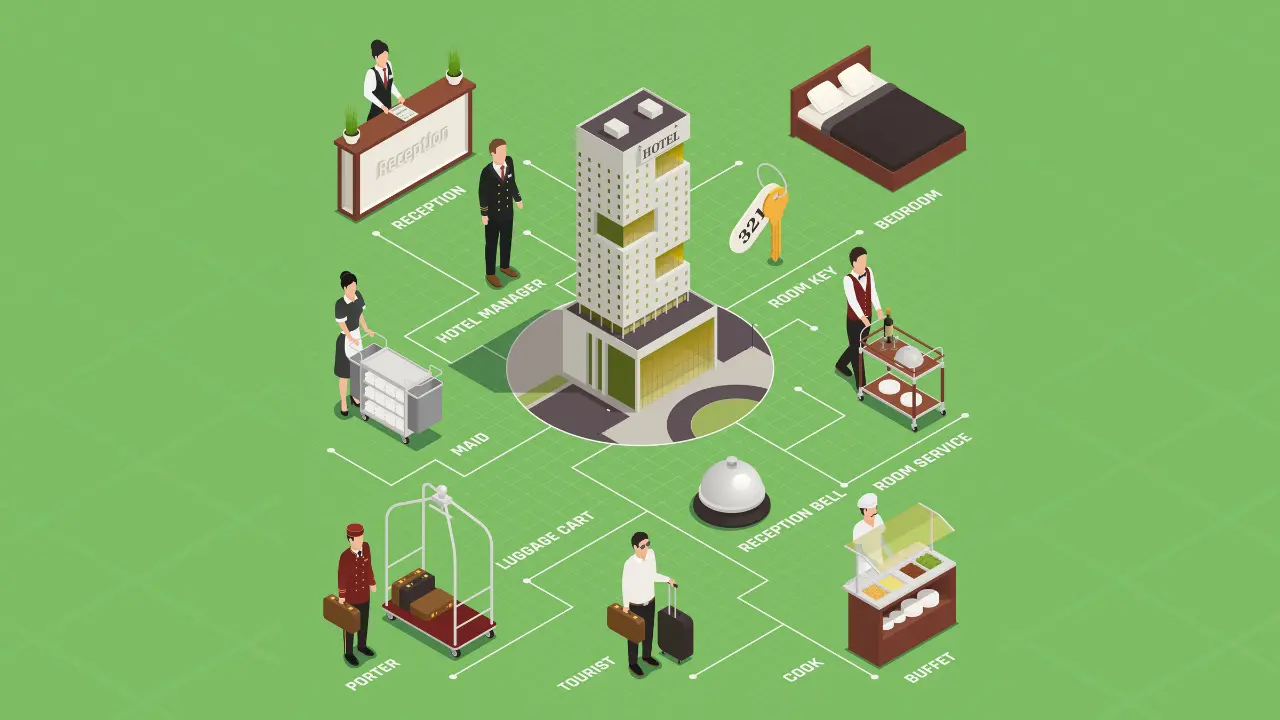
AI hotel management systems are intelligent software platforms that use machine learning, natural language processing, and predictive analytics to automate hotel operations, optimize guest experiences, and enhance business performance through data-driven insights.
Think of it as having a brilliant assistant who never sleeps, never forgets, and continuously learns from every guest interaction. These systems integrate multiple hotel functions from booking and check-in to housekeeping and revenue management into one intelligent platform that makes decisions and takes actions automatically.
Core Technologies Behind AI Hotel Systems
Modern AI hotel management systems combine multiple cutting-edge technologies to create intelligent, automated solutions that learn from guest behavior, predict operational needs, and optimize hotel performance in real-time.
Machine Learning (ML):
Natural Language Processing (NLP):
Predictive Analytics:
Internet of Things (IoT) Integration:
AI systems connect with smart devices throughout the hotel from thermostats and lighting to door locks and mini-bars creating a seamlessly connected guest experience.
Types of AI Hotel Management Systems
AI hotel management systems come in several distinct configurations, each designed to address specific operational needs and property sizes, from enhanced traditional systems to comprehensive all-in-one intelligent platforms.
1. AI-Enhanced Property Management Systems (PMS)
These are traditional hotel management systems supercharged with artificial intelligence. They handle reservations, guest profiles, room assignments, and billing while using AI to optimize these processes automatically.
2. Intelligent Customer Relationship Management (CRM)
These systems track guest preferences, communication history, and behavior patterns to enable hyper-personalized service. They can predict what amenities a guest might want or when they’re likely to book their next stay.
3. AI-Powered Revenue Management Systems (RMS)
These sophisticated platforms continuously analyze market conditions, competitor pricing, demand patterns, and dozens of other factors to optimize room rates in real-time for maximum profitability.
4. All-in-One Integrated AI Platforms
These comprehensive solutions combine PMS, CRM, RMS, and additional modules like housekeeping management, maintenance scheduling, and guest communication into one unified system.
The key difference from traditional hotel software is that AI systems don’t just store and organize information they actively learn, predict, and make recommendations that improve over time.
Benefits of AI-Powered Hotel Management Software
AI-powered hotel management software transforms traditional hospitality operations by automating routine tasks, personalizing guest experiences, and driving measurable improvements in both operational efficiency and revenue generation.
Operational Efficiency That Actually Works
Imagine walking into your hotel tomorrow morning and finding that 80% of your routine tasks are already completed automatically. AI hotel management systems make this reality possible by transforming how hotels operate behind the scenes.
- Automated Check-in and Check-out: Guests can complete the entire check-in process through mobile apps or self-service kiosks, with AI systems automatically selecting the best available room based on preferences, loyalty status, and current occupancy. This reduces front desk workload by up to 60% while eliminating guest wait times.
- Smart Room Allocation: Instead of manually assigning rooms, AI algorithms consider factors like guest preferences, room maintenance schedules, housekeeping efficiency, and even weather patterns to optimize assignments. This results in higher guest satisfaction and more efficient housekeeping operations.
- Predictive Maintenance: AI systems monitor equipment performance data from HVAC systems, elevators, and other critical infrastructure to predict failures before they occur. This proactive approach reduces emergency repairs by 40% and prevents guest disruptions.
- Intelligent Inventory Management: The system tracks usage patterns for everything from towels to toiletries, automatically reordering supplies when inventory reaches optimal levels. This prevents stock outs while reducing carrying costs.
Enhanced Guest Experience That Builds Loyalty
Today’s travelers expect personalized experiences, and AI delivers this at scale in ways that would be impossible with manual processes.
- Hyper-Personalized Service: AI systems remember that Mrs. Johnson prefers a quiet room on the third floor with extra pillows, while Mr. Chen always requests late checkout and restaurant recommendations. This information is instantly available to all staff members, creating a seamless, personalized experience.
- Dynamic Room Customization: Smart room systems automatically adjust temperature, lighting, and entertainment settings based on guest preferences learned from previous stays or real-time feedback.
- Proactive Service Delivery: AI can predict guest needs before they’re expressed. If a guest typically orders room service at 7 PM, the system can proactively suggest menu options at 6:30 PM, increasing satisfaction and revenue.
Cost Savings and Revenue Growth
The financial impact of AI hotel management systems extends far beyond simple cost reduction, they actively drive revenue growth through intelligent optimization.
- Dynamic Pricing Optimization: AI algorithms analyze hundreds of factors, such as local events, weather patterns, competitor pricing, historical demand, and booking pace to adjust room rates in real-time. Hotels typically see 10-15% revenue increases through more sophisticated pricing strategies.
- Labor Cost Optimization: While AI doesn’t replace human staff, it eliminates many repetitive tasks, allowing hotels to operate more efficiently. Properties typically reduce operational costs by 15-25% while maintaining or improving service quality.
- Energy Management: AI systems automatically adjust heating, cooling, and lighting based on occupancy patterns and guest preferences, reducing energy consumption by 20-30% without impacting guest comfort.
- Revenue Stream Optimization: AI identifies opportunities to increase ancillary revenue through personalized upselling, targeted promotions, and optimized service timing. For example, the system might suggest spa services to guests who’ve had stressful travel days.
Data-Driven Decision Making
Perhaps the most valuable benefit is the transformation from gut-feeling management to data-driven decision making.
- Real-Time Performance Analytics: Managers receive instant insights into occupancy trends, revenue performance, guest satisfaction metrics, and operational efficiency. This enables quick course corrections and strategic planning.
- Guest Behavior Insights: Understanding how guests interact with your property from booking patterns to service preferences enables more targeted marketing and improved service delivery.
- Competitive Intelligence: AI systems can monitor competitor pricing, availability, and guest reviews to provide strategic insights for positioning and pricing decisions.
Prioritize Privacy?
Platforms like Signal and Element prove there’s demand for secure communication.
Launch your own end-to-end encrypted platform now.
Step-by-Step Implementation Guide
Successfully implementing AI hotel management systems requires careful planning, methodical execution, and strong change management. This proven framework has helped hundreds of hotels achieve smooth transitions and maximum ROI.
Phase 1: Assessment & Planning (2-4 weeks)
Week 1-2: Current System Audit
Start by documenting your existing technology infrastructure, operational processes, and pain points. Create a comprehensive inventory of:
- Current software systems and their capabilities.
- Integration points and data flows.
- Staff roles and responsibilities.
- Guest journey touchpoints.
- Performance metrics and KPIs.
Assessment Questions to Answer:
What processes take the most staff time?
Where do guests experience friction or delays?
What data do you currently collect but not use effectively?
Which departments struggle most with manual processes?
What are your biggest operational challenges?
Week 3: Needs Assessment and Goal Setting
Define specific, measurable objectives for your AI implementation. Instead of vague goals like “improve efficiency,” set concrete targets such as:
- Reduce check-in time from 8 minutes to 2 minutes.
- Increase direct booking revenue by 15%.
- Achieve 90% guest satisfaction score.
- Reduce staff overtime by 20%.
Week 4: Budget Planning and ROI Projections
Develop realistic budget estimates including:
- Software licensing costs (typically $3-15 per room per month).
- Training and change management costs.
- Hardware upgrades if needed.
- Ongoing support and maintenance.
Calculate expected ROI based on:
- Labor cost savings.
- Revenue optimization potential.
- Operational efficiency gains.
- Guest satisfaction improvements.
Phase 2: Vendor Selection (3-6 weeks)
Week 1-2: Requirements Documentation
Create a detailed Request for Proposal (RFP) that includes:
- Technical requirements and integration needs.
- Functional requirements by department.
- Security and compliance requirements.
- Training and support expectations.
- Budget parameters and payment terms.
Week 3-4: Vendor Evaluation
Evaluate vendors based on:
- Technology fit: Does the solution meet your technical requirements?
- Ease of use: Can your staff easily learn and use the system?
- Integration capabilities: How well does it connect with existing systems?
- Support quality: What level of ongoing support is provided?
- Company stability: Will the vendor be around in 5 years?
- Customer references: What do similar hotels say about their experience?
Week 5-6: Demos and Final Selection
Schedule comprehensive demos with your top 3 vendors. Include key stakeholders from:
- Front office management.
- Housekeeping leadership.
- IT or technical staff.
- General management.
- Finance team.
Pro Tip: Request demos using your actual data and scenarios, not generic examples. This reveals how the system will actually perform in your environment.
Phase 3: System Setup & Integration (4-8 weeks)
Week 1-2: Data Migration and System Configuration
Data Migration Process:
- Extract data from existing systems.
- Clean and validate data quality.
- Map data fields to new system structure.
- Test migration in a staging environment.
- Execute full migration during low-occupancy period.
System Configuration:
- Set up user roles and permissions.
- Configure booking rules and policies.
- Establish pricing and inventory parameters.
- Customize guest communication templates.
- Define reporting and analytics preferences.
Week 3-4: Integration Development
Connect your AI system with existing tools:
- PMS integration: If keeping existing PMS, ensure seamless data flow.
- Payment processing: Connect credit card and payment systems.
- Channel management: Integrate with booking platforms (Booking.com, Expedia, etc.).
- Accounting systems: Enable automatic financial reporting.
- Marketing platforms: Connect CRM and email marketing tools.
Week 5-6: Testing and Quality Assurance
Testing Checklist:
- All integrations working correctly.
- Data accuracy across all systems.
- User permissions functioning properly.
- Mobile app functionality.
- Backup and recovery procedures.
- Performance under peak load conditions.
Week 7-8: Security Implementation and Final Preparations
- Implement cybersecurity measures.
- Configure data backup systems.
- Set up monitoring and alerting.
- Create user documentation.
- Prepare go-live procedures.
Phase 4: Staff Training & Go-Live (2-4 weeks)
Week 1-2: Comprehensive Training Program
Management Training (2 days):
- System overview and capabilities.
- Analytics and reporting tools.
- Performance monitoring.
- Troubleshooting common issues.
Department-Specific Training:
- Front desk staff (1 day): Check-in/out procedures, guest services, problem resolution.
- Housekeeping (Half day): Room status updates, maintenance requests, scheduling.
- Maintenance team (Half day): Work order management, predictive maintenance alerts.
- Management team (1 day): Advanced features, reporting, optimization strategies.
Week 3: Soft Launch
Begin using the system with limited functionality:
- Start with basic check-in/check-out processes.
- Gradually add features as staff become comfortable.
- Maintain backup procedures for critical processes.
- Monitor system performance closely.
Week 4: Full Go-Live
Activate all system features:
- Complete transition from old systems.
- Implement all automated processes.
- Begin using advanced AI features.
- Start measuring performance improvements.
Phase 5: Optimization & Scaling (Ongoing)
Month 1-3: Performance Monitoring
Track key metrics daily:
- System uptime and response times.
- Staff adoption rates and satisfaction.
- Guest satisfaction scores.
- Operational efficiency improvements.
- Revenue impact.
Month 4-6: Feature Expansion
Gradually introduce advanced features:
- Predictive analytics and forecasting.
- Advanced personalization features.
- Additional integration opportunities.
- Mobile app enhancements.
Month 7-12: Continuous Improvement
- Analyze performance data for optimization opportunities.
- Gather staff feedback for system improvements.
- Explore additional AI capabilities.
- Plan for system expansion or upgrades.
Critical Success Factors:
- Executive leadership commitment.
- Comprehensive staff training.
- Realistic timeline expectations.
- Strong change management.
- Continuous monitoring and optimization.
Need Implementation Support?
Best AI Hotel Software Solutions in 2026
Choosing the right AI hotel management system can make or break your implementation success. Based on extensive research and real-world performance data, here are the top solutions categorized by hotel size and needs.
Comparison Overview
| Software | Best For | Key AI Features | Starting Price | Implementation Time |
|---|---|---|---|---|
| Guilded | Large Chains (200+ rooms) | Predictive analytics, dynamic pricing, guest preference AI | $8-15/room/month | 3-6 months |
| Cloudbeds | Mid-Market (50-200 rooms) | Revenue optimization, automated messaging, smart upselling | $5-12/room/month | 2-4 months |
| Hotelogix | Small Hotels (20-100 rooms) | Intelligent booking, guest communication AI, inventory optimization | $3-8/room/month | 1-2 months |
| RoomRaccoon | Boutique Properties | Personalization engine, smart concierge, automated marketing | $4-10/room/month | 1-3 months |
| innRoad | Budget-Conscious | Basic AI automation, predictive maintenance, guest insights | $2-6/room/month | 2-6 weeks |
Enterprise Solutions (200+ Rooms)
1. Oracle OPERA Cloud
Strengths:
- Industry-leading scalability and reliability.
- Advanced AI-powered revenue management.
- Comprehensive integration ecosystem.
- Global support and implementation expertise.
- Sophisticated guest preference learning.
AI Capabilities:
- Machine learning-based demand forecasting.
- Automated pricing optimization.
- Predictive guest behavior analysis.
- Intelligent upselling recommendations.
- Advanced fraud detection.
Best For: Large hotel chains, luxury properties, and complex operations requiring enterprise-grade functionality.
Investment Considerations: Higher initial cost but proven ROI for large properties. Implementation requires dedicated IT resources and a 3-6 months timeline.
2. Protel hotelsoftware
Strengths:
- Strong European presence and GDPR compliance.
- Modular architecture allows customization.
- Excellent mobile functionality.
- Multi-language support.
- Robust reporting and analytics.
AI Features:
- Smart room assignment algorithms.
- Predictive maintenance scheduling.
- Automated guest communication.
- Dynamic pricing recommendations.
Mid-Market Solutions (50-200 Rooms)
3. Cloudbeds
Strengths:
- All-in-one platform reduces complexity.
- Intuitive user interface.
- Strong channel management.
- Excellent customer support.
- Regular feature updates.
AI Capabilities:
- Revenue optimization engine.
- Automated guest messaging.
- Smart upselling suggestions.
- Predictive booking analytics.
- Intelligent review management.
Implementation Experience: Most hotels are fully operational within 8-12 weeks. The system’s intuitive design minimizes training requirements.
ROI Potential: Mid-market hotels typically see 12-18% revenue increases within the first year, with payback periods of 8-14 months.
4. RMS Cloud
Strengths:
- Purpose-built for mid-market properties.
- Strong Asia-Pacific presence.
- Comprehensive PMS functionality.
- Good integration capabilities.
- Competitive pricing.
AI Features:
- Automated yield management.
- Guest preference tracking.
- Predictive demand forecasting.
- Smart inventory optimization.
Small Hotel Solutions (Under 50 Rooms)
5. Hotelogix
Strengths:
- Designed specifically for independent hotels.
- Cloud-based with no hardware requirements.
- Affordable pricing structure.
- Simple implementation process.
- Good mobile app functionality.
AI Capabilities:
- Intelligent booking management.
- Automated guest communication.
- Basic revenue optimization.
- Predictive maintenance alerts.
- Guest sentiment analysis.
Success Story: The Boutique Garden Hotel (32 rooms) in Portland implemented Hotelogix in 2024. They achieved 28% increase in direct bookings, 15% improvement in guest satisfaction scores, and reduced administrative time by 40%.
6. innRoad
Strengths:
- Very competitive pricing.
- Quick implementation.
- User-friendly interface.
- Good for budget-conscious properties.
- Decent customer support.
AI Features:
- Basic automation workflows.
- Guest preference tracking.
- Simple revenue optimization.
- Automated email marketing.
Boutique and Specialty Properties
7. RoomRaccoon
Strengths:
- Designed for unique, boutique properties.
- Excellent personalization capabilities.
- Modern, attractive interface.
- Strong focus on guest experience.
- Flexible customization options.
AI Capabilities:
- Advanced guest personalization.
- Intelligent concierge services.
- Automated marketing campaigns.
- Smart service recommendations.
- Predictive guests need analysis.
Ideal For: Boutique hotels, B&Bs, and unique properties that prioritize personalized guest experiences over operational scale.
Selection Criteria Checklist
Technical Requirements:
- Integration with existing systems.
- Mobile accessibility for staff and guests.
- Scalability for future growth.
- Security and compliance features.
- API availability for custom integrations.
Operational Needs:
- Ease of use for non-technical staff.
- Training and support quality.
- Customization capabilities.
- Reporting and analytics features.
- Multi-language support if needed.
Financial Considerations:
- Total cost of ownership (not just monthly fees).
- Implementation and training costs.
- Contract terms and flexibility.
- ROI potential and payback period.
- Hidden fees and additional charges.
Vendor Evaluation:
- Company stability and track record.
- Customer references and reviews.
- Support quality and response times.
- Innovation and development roadmap.
- Local presence and expertise.
Which Option Best Suits You?
Conclusion
AI hotel management systems are revolutionizing hospitality by boosting efficiency (up to 23%) and driving revenue growth (up to 18%) within the first year. Rather than replacing staff, AI enhances guest experiences by automating routine tasks and offering valuable insights.
From boutique hotels to large chains, AI solutions are now more accessible and cost-effective with ROI typically seen within 4 -12 months and long-term returns exceeding 600%.