

Artificial intelligence has evolved rapidly over the past decade, but a new frontier is now emerging: agentic AI. Unlike traditional AI tools that passively respond to commands, agentic AI can take initiative, make autonomous decisions, and execute complex workflows across industries. From automating IT operations to redefining retail experiences, agentic AI is no longer a futuristic concept; it’s here, and it’s reshaping the way businesses operate.
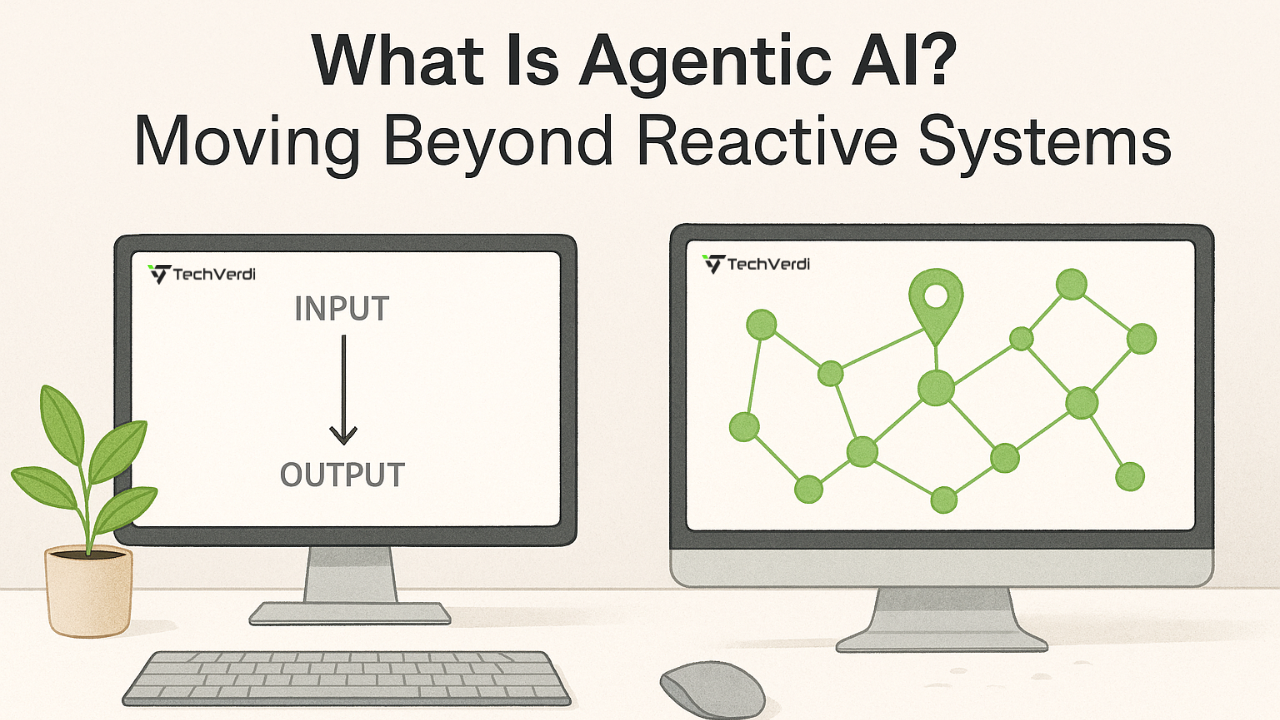
What Is Agentic AI? Moving Beyond Reactive Systems
Agentic AI is a more advanced type of artificial intelligence that can make decisions and take action on its own. It doesn’t just respond—it anticipates and executes.
Traditional AI
Chatbots and recommendation engines are reactive. They wait for human prompts before producing any output or analysis.
Agentic AI
Agentic AI is proactive. It sets goals and carries out tasks with minimal human intervention. It can:
- Make decisions in real-time based on context.
- Coordinate with other AI agents.
- Adjust strategies autonomously as variables change.
Case Study: Dynatrace Intelligence
By using agentic AI to monitor IT systems, Dynatrace doesn’t just detect issues; it predicts failures and remediates problems autonomously—drastically reducing downtime and operational costs.
The key differentiator is initiative. Agentic AI interprets context and takes action within predefined guardrails.
Why Agentic AI Is a Game-Changer for Businesses
Businesses across sectors are recognizing agentic AI as more than a technological novelty; it’s a strategic tool.
01
Operational Efficiency
High-volume, repetitive tasks are perfect candidates for agentic AI. In banking, AI agents streamline onboarding by validating documents and detecting compliance issues autonomously. In retail, Microsoft’s agentic AI solutions automate inventory and merchandising, freeing staff for higher-value tasks.
02
Smarter Decision-Making
Unlike traditional automation, agentic AI integrates structured and unstructured data to make informed decisions. Google’s Agent-to-Agent protocols allow multiple AI agents to collaborate seamlessly, reducing errors and enterprise-wide inefficiencies.
03
Scalable Innovation
Deploying agentic AI allows companies to scale complex operations without increasing headcount. For example, Moltbook demonstrates the potential of AI ecosystems where autonomous agents interact and create new solutions at scale.
Agentic AI in Action: Real-World Examples
Retail Transformation
Microsoft
Microsoft has pioneered agentic AI in retail, introducing Copilot Checkout, Brand Agents, and catalog enrichment templates. These tools:
- Provide personalized, real-time shopping recommendations.
- Automate backend operations like catalog and inventory checks.
- Empower store associates with contextual customer insights.
The Result: Faster decision-making, improved customer experience, and measurable business growth.
IT Operations Revolution
Dynatrace
Dynatrace Intelligence demonstrates agentic AI in IT through an autonomous system that:
- Detects anomalies before they impact end-users.
- Prioritizes incidents based on potential business impact.
- Remediates problems autonomously within oversight loops.
The Outcome: Reduced downtime, faster resolution, and proactive risk management for mission-critical operations.
Emerging Ecosystems
Moltbook
Platforms like Moltbook showcase a new era of AI-to-AI communication, where agents post, interact, and generate insights autonomously.
Future Outlook: While authenticity is debated, the platform hints at the scale of agentic networks in research and digital economies.
Building Trust and Governance Around Autonomous AI
As AI becomes more autonomous, governance and oversight are critical. Businesses must implement three core guardrails:
📊
Context-Rich Inputs
Ensuring AI agents have access to accurate, timely, and relevant data to prevent misinformed autonomous decisions.
🔗
Structured Communication
Agent-to-agent protocols and workflow monitoring prevent duplicated work, conflicts, or cascading errors.
🛡️
Operational Control
AgentOps frameworks track performance, decision paths, and escalations, ensuring total compliance and human trust.
Without these strategic guardrails, autonomy can lead to unpredictable outcomes, especially in regulated industries like finance, healthcare, and retail.
The Future of Agentic AI: 2026 and Beyond
Drive Hyper-Personalization
From marketing and e-commerce to customer support, AI agents will anticipate user needs and act proactively before the user even asks.
Enable Enterprise Autonomy
Coordinated AI systems will manage multi-step workflows across departments, reducing friction and accelerating global operations.
Expand into New Frontiers
AI agents will increasingly interact with each other, forming autonomous ecosystems for research, innovation, and large-scale problem-solving.
By investing in agentic AI now, organizations can position themselves to adapt faster, operate efficiently, and deliver superior customer experiences in an increasingly competitive landscape.
Final Thoughts
Agentic AI is not a passing trend; it’s a transformational technology that bridges the gap between human insight and autonomous action. By integrating context, communication, and control, businesses can scale operations, reduce risk, and unlock new opportunities.
From IT operations to retail, agentic AI is reshaping the rules of productivity. The companies that embrace it thoughtfully will not just survive, they will thrive in the age of autonomous intelligence.
Frequently Asked Questions
What is Agentic AI?
Agentic AI is a more advanced type of artificial intelligence that can make decisions and take action on its own. Unlike traditional AI, which mostly responds to instructions or analyzes information, agentic AI can set goals, create a plan, and carry out tasks with very little human help.
How does Agentic AI work?
Agentic AI works by combining large language models, real-time data, and operational context. It interprets information, communicates with other AI agents if needed, and executes tasks while adapting to changing conditions.
What are the benefits of Agentic AI for businesses?
Agentic AI boosts efficiency, reduces operational costs, improves decision-making, and automates complex workflows. It helps enterprises scale by handling repetitive tasks, enabling employees to focus on strategic work.
Which industries can use Agentic AI?
Agentic AI is applied in finance, retail, healthcare, IT operations, and e-commerce. It is useful wherever multi-step workflows, data-driven decisions, and automation can improve performance.
What is the difference between Agentic AI and traditional AI?
Traditional AI is reactive and responds to user prompts, while Agentic AI is proactive. It takes initiative, manages multi-step processes, and makes context-aware decisions.
Can Agentic AI communicate with other AI agents?
Yes, Agentic AI can use protocols like Agent-to-Agent (A2A) communication to coordinate tasks, share data, and ensure workflow consistency across systems.
Is Agentic AI safe for businesses?
Agentic AI is safe when proper controls, monitoring, and governance frameworks like AgentOps are in place. These ensure accountability, compliance, and risk management.
What is the future of Agentic AI?
The future of Agentic AI includes autonomous digital workforces, AI-powered decision-making across enterprises, proactive problem-solving, and AI ecosystems interacting without human prompts.